
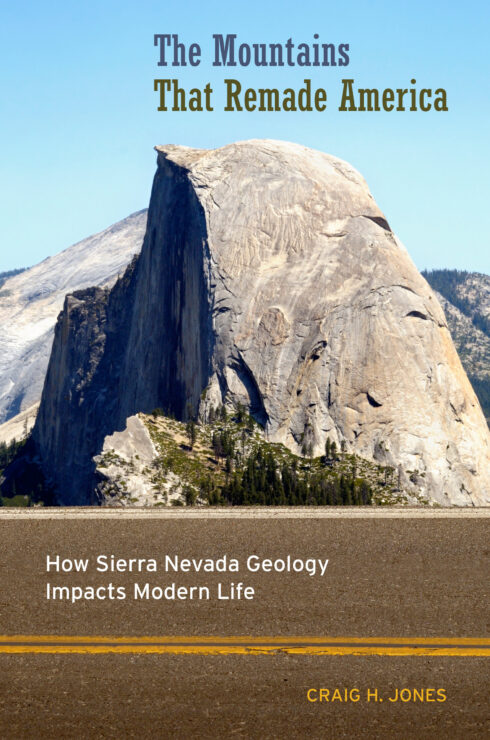
American California was defined by the Gold Rush. That event landed at a very special time, the interregnum between Mexican and American rule. That timing led to profound changes in the settling of the West, the laws applied to land and water, and the growth of America that would determine the winner of the Civil War. Yet it was also a very special time geologically: a bit earlier geologically and there would be no gold and a bit later and the easy gold would all be gone. The duration and impact of Sierra gold grew from the geologically peculiar confluence of three types of deposits: those in the rivers, those in fossil rivers, and those in veins underground. And yet not far from rivers flooded with mining debris and hillsides demolished for gold was where the nascent conservation movement found a persuasive voice. How could John Muir champion wilderness—indeed, an unpopulated wilderness—in the same range as Gold Rush mining? It comes to how the range was made, what rocks were where and which rocks contained gold.
A virtual presentation by Craig H. Jones, author and Professor of Geological Sciences, University of Colorado, Boulder, Colorado